Confidential computing that eliminates the key.
The only platform that removes the key entirely — decryption is bound to attested hardware, not a secret anyone holds. The result is true, hardware-bound data sovereignty: a stolen file is cryptographic noise on any machine it wasn't sealed to.
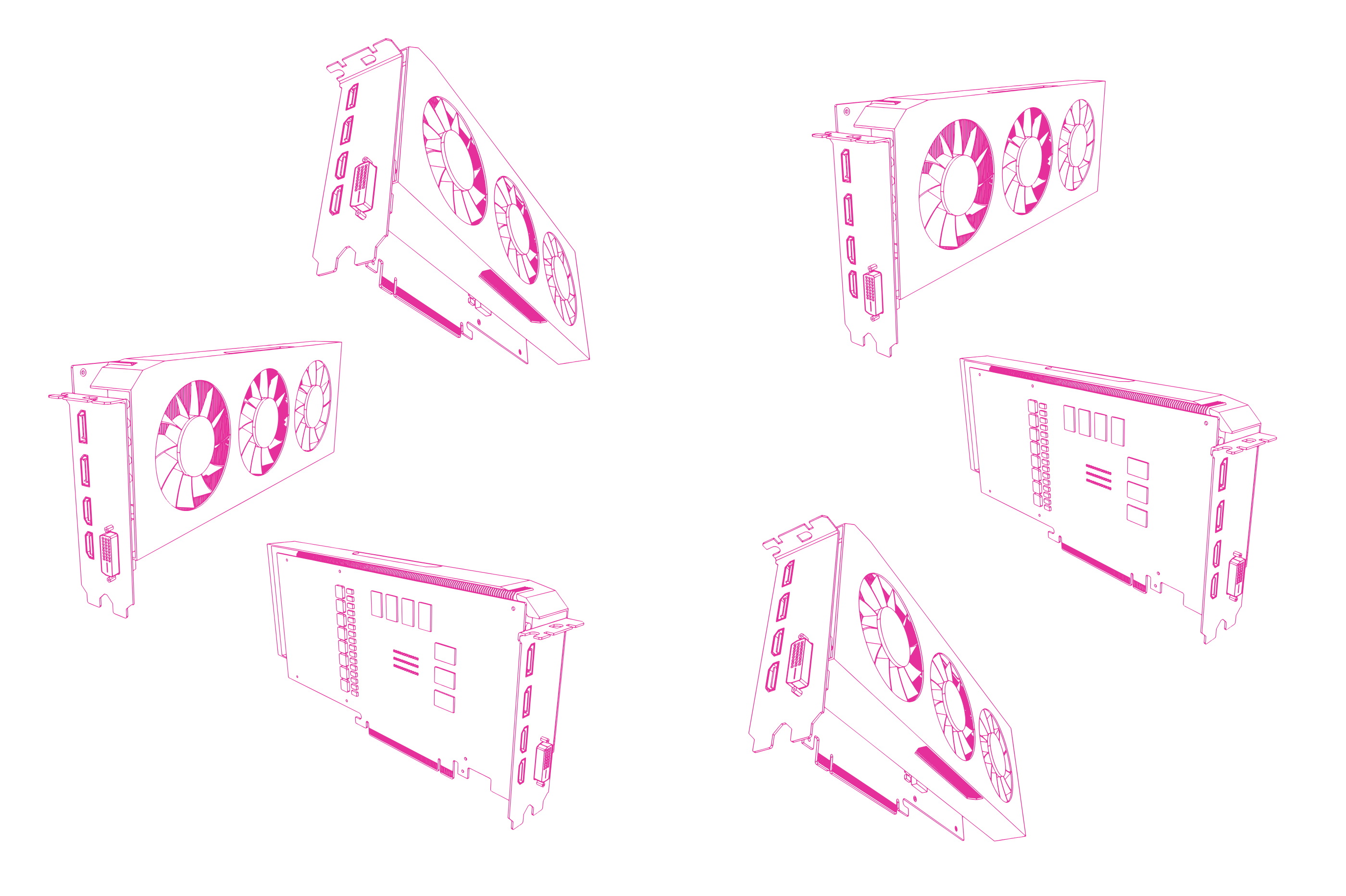
Seal model weights to attested silicon, so a stolen checkpoint is noise off the approved GPU.
Runs on attested confidential-computing hardware


 TPM 2.0
Confidential computing protects data in use. We remove the reason to steal it at all.
Encryption has always covered data at rest and in flight. Confidential computing closes the third gap — data in use — by running workloads inside hardware-isolated enclaves whose memory even the host operator cannot read.
Most platforms stop there: the enclave protects the computation, but a key still exists, held by someone, portable to anywhere. Seven Layer derives the key from the enclave's own measured identity at the moment of use — nothing to hold, nothing to hand over, nothing that works anywhere else.
CPU confidential computing
TDXSEV-SNP
No single party can unseal. Not even the operator.
Custody of a key is split across parties by default — a threshold no one can meet alone, and that any one party can revoke. The root secret is never assembled anywhere, at any moment, including setup. Trust rests on the math, not on whoever holds the machine.
- outcome
- REFUSED
- reason
- quorum not met — 2 of 3 required, 1 endorsement present
- authority
- N-THRESHOLD (root never assembled)
- constitution
- sha256:9f2c…a417
- witnesses
- 3 of 3 co-signed this entry
- inclusion
- RFC 6962 proof, audit path length 16
Every refusal is a signed event. Every claim survives an attack suite.
Security pages usually ask you to believe. Ours invites you to check.
A standing adversarial suite attacks a live node on every change: tampered binding records, forged attestation tiers, spliced key shards, edited audit chains, replayed requests, downgraded hardware. The build fails unless every attack is refused — and the refusal log is retained as evidence, per run.
Attestation evidence, releases, refusals, and destruction receipts land in a single Merkle log with signed checkpoints and independently verifiable inclusion proofs. The operator cannot silently rewrite history — including us.
A signed, exportable artifact: who holds custody, what hardware attested, which access paths were exercised, and that zero bytes were exposed. The document your compliance team hands the regulator, verifiable without our cooperation.
Two independent builds of our binaries are byte-identical, with a published SBOM. You can verify the software running your vault is the software we say it is.
Built for weights that stay sealed.
We bind attestation, sealing, and key release into one path, so a stolen file stays noise on every machine it was not made for.
The plaintext window, closed
Hardware-derived keys and in-VRAM decryption seal every point weights would otherwise sit in the clear, across the serving path.
Every property, a live proof
Attestation, anti-replay, CC enforcement, and in-VRAM inference each run as a proof on the GPU — every deployment shows its verdicts before a key is released.
Every decision bound to attested hardware.
We bind sealing, key derivation, and release to a live hardware measurement, so weights decrypt only inside the GPU they were made for. Attestation, image match, and policy stay visible before a single key is ever issued.
Weights decrypt only inside VRAM on the attested GPU under Confidential Computing. No plaintext copy ever lands in system memory.
The root secret splits across five independent nodes. No operator, including us, can derive a key alone; any three must cooperate to unlock it.
Every GPU is verified against NVIDIA's P-384 certificate chain. A mismatch between claimed and measured state aborts before a byte decrypts.
The data that cannot leak, in the fields that cannot afford it.
Defense secrets, patient records, sealed bids, evidence chains, vehicle fleets — the same guarantee, bound to the hardware you approve, with no administrator who can override it.
Seven composable layers, one guarantee.
Decryption becomes a property of measured hardware and elapsed time, not of key possession. Each layer stands on its own; stacked, they leave nothing portable to steal.
- L1GPU Silicon AttestationHardware-rooted trust anchor
- L2TPM2 Boot-Chain BindingKeys sealed to an unmodified boot state
- L3Threshold MPCNo single party ever holds the root secret — not even at birth
- L4Forward-Secure State RatchetTime-locks enforced by math, not policy
- L5Path ORAMAccess patterns indistinguishable from random
- L6STARK Zero-Knowledge ProofsProve correctness without revealing anything
- L7Fragment Dependency TopologyStructure that rewrites itself every epoch